Imagine that you were an Israelite living in Egypt when Pharoah proclaimed the first Immigrant Threat Narrative in recorded history:
“Look,” he said to his people, “the Israelites have become far too numerous for us. Come, we must deal shrewdly with them or they will become even more numerous and, if war breaks out, will join our enemies, fight against us and leave the country.” Exodus 1: 9-10.
Then imagine, to your surprise, that a prophet from the tribe of Benjamin speaks up to side with Pharaoh, trying to minimize the potential harm: “Have no fear my fellow Israelites, Pharoah is only going to target the “bad,” “criminal” Israelites of our brethren. God’s hand is on Pharoah. He is going to make Egypt great again.” This prophet even joins a growing chorus of Egyptian prophets and prophetesses supporting Pharoah, including Gregorios Kleithron and Paula Ou-bash, and claims to represent all the twelve tribes.
Soon, however, Pharoah puts slave masters over the Israelites to oppress them with harsh labor. But the more they were oppressed, the more they multiplied and spread; so the Egyptians came to dread them. The prophet from the tribe of Benjamin, however, did not speak up. He did not speak up until years later when Pharoah did the unthinkable by commanding the Hebrew midwives: “When you are helping the Hebrew women during childbirth on the delivery stool, if you see that the baby is a boy, kill him.” Exodus 1:16
The prophet from Benjamin publicly condemns this policy of infanticide. But within a week, he is seen eating in the courts of Pharoah and even proclaims Paula Ou-bash to be a heroine.
Whoever has ears, let them hear.
Though it’s not a perfect analogy, this creative rendering of Exodus 1 captures the spirit and sentiment of the “We Are Not a Monolith, We Are A Multitude” Statement which has garnered the signatures of more than 250 Latina/o Christian pastors, leaders, scholars, and community members from diverse Evangelical and Protestant denominational backgrounds. www.wearenotamonolith.com
Each signatory has their own specific reasons for signing, but I believe we share at least one thing in common:
We cannot stand silent any longer when any Latino prophet leads the media to believe that they speak on behalf of millions of diverse Latino Christians worldwide, while supporting a presidential administration which has caused grave suffering to millions of Latino siblings in Christ, contrary to clear biblical witness.
Some may wonder why this statement took public form. This is because many leaders have previously attempted to address these issues in private conversations and through relational appeals, but to no avail. Furthermore, since the contested claims of representation were made publicly, they also merited a public response.
We signed this statement for the thousands of Candelaria’s and their families who are suffering under the wrath of Pharoah:
I met Candelaria this week. She came to the U.S. with her daughter Luz, fleeing domestic violence in her home country. She has worked for the past 14 years as a cook, dishwasher, and waitress of the same restaurant in a U.S. suburb. In the evenings she also sometimes worked cleaning office buildings. She is the mother of two U.S. citizen children who were thriving in school, church, and community until their mother was picked up in a random ICE raid. They have been separated for nearly a year, and her children cry themselves to sleep most nights, even sleeping without a blanket, feeling too guilty to enjoy comfort while their mother suffers. As we said our goodbyes, tears streamed from her eyes, unconsolably.
Her voice was heard in Adelanto,
weeping and great mourning,
Candelaria weeping for her children
and refusing to be comforted.
Matthew 2:18
——–
In the wise words of my pastor, Marcos Canales:
We, the Multitude, refuse to be comforted.
We refuse to be comforted by the false promises of Pharaoh and his religious surrogates.
We refuse to be comforted by any single individual or organization claiming to be speak for the entirety of the Latino Christian community, especially when they do not weep with Candelaria and lift up the voice of Pharaoh for the sake of Egypt’s treasures.
We refuse to be comforted by any political party, right or left, which tries to manipulate us for earthly power.
Like the Israelites, we groan in our slavery and cry out to God. Exodus 2:23-25
Our many voices cry out in unison—women, men, young, old, intercultural, intergenerational, Evangelical, and Protestant—serving Christ and our local communities, seeing Jesus in all whom society rejects.
We bow down in worship in our local churches because we know that the Lord is concerned about us and sees our misery. Exodus 4:31
We know that God will soon arise.
Wake up, my God, and bring justice! Psalm 7:6
Arise, Lord, arise!

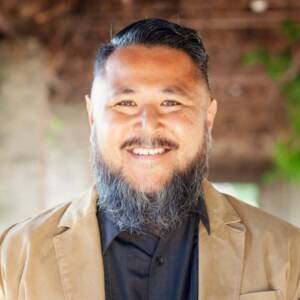 Rev. Dr. Robert Chao Romero is “Asian-Latino,” and has been a professor of Chicana/o Studies and Asian American Studies at UCLA since 2005. He received his Ph.D. from UCLA in Latin American History and his Juris Doctor from U.C. Berkeley. Romero has published more than 30 academic books and articles on issues of race, immigration, history, education, and religion, and received the Latina/o Studies book award from the international Latin American Studies Association. His recent book, “Brown Church: Five Centuries of Latina/o Social Justice, Theology, and Identity (2020),” received the InterVarsity Press Readers’ Choice Award for best academic title. Romero is a former Ford Foundation and U.C. President’s Postdoctoral Fellow, as well as a recipient of the Louisville Institute’s Sabbatical Grant for Researchers. Robert is also an ordained minister and community organizer.