Skip to content Skip to footer

Shrewd Stewardship in Versatile Sanctuaries: Ecclesial Reimaginations Under Constraint

Sanctuaries cannot be reimagined in a vacuum detached from experiential realities. These realities are often characterized by various forms of constraints, which shape the perceptions, experiences and navigations of contexts. Constraints are subjective in the sense that even if there is congruence, similarities or comparability in their descriptions across contexts, people exercise their discretion in acting within, beyond, or amidst them, and by so doing they reinforce, pose challenges against, or collaborate with the sources of these constraints. Constraints are therefore not deterministic, but rather present opportunities for collective actions to arise that interact with them in many possible ways.

Three instances of sanctuary may illustrate the above more tangibly. In the 1980s, when Central Americans fled civil wars and death squads, many of them sought safety in the United States. Amidst the government’s deportation measures, Southside Presbyterian Church in Tucson, Arizona welcomed some 15,000 people seeking refuge. The congregation navigated multiple constraints imposed on the sanctuary – harassment, surveillance, infiltration of state agents, detention, convictions, among many other state-sanctioned actions were common and are well-documented.[1] The congregation’s collaboration with other churches developed into what is now known as the Sanctuary Movement.[2]

On October 26, 2018, an Armenian family who had lived in the country for nine years and risked expulsion sought refuge in the Bethel Protestant Church of the Hague, the Netherlands. Permission to stay had been granted, but the state made multiple appeals. The family’s application to the Children’s Pardon regulation that exempts minors who have lived in the country for over five years also failed. Pastors and visitors from around the world across traditions participated in a non-stop service that spanned 97 days. Having learnt about the situation facing the family, people gathered around them in solidarity. As law enforcement could not legally enter the church when a religious gathering takes place, the service became a de facto sanctuary. The service was concluded when the family’s status to stay had been confirmed.[3]

Since 2013, the Cosmopolitan Affirming Church has been welcoming LGBTQI+ people of faith in Nairobi, Kenya. Many attendees have experienced violence due to their gender identities and/or sexual orientations and fled neighboring countries. Most congregants were only willing to be interviewed anonymously due to possible government retaliation and familial violence.[4] Even in Kenya, where many interviewees considered relatively safer and more tolerant towards LGBTQI+ people, the church has had to relocate ten times due to arrests, intimidation, threats, among other experiences, which made the congregation decide to keep its current gathering site a secret to the public, as it continues seeking to be a safe space for the spiritual healing and communion for LGBTQI+ people of faith.

It is important to consider the ecclesiology that informs our reimagination of church as sanctuary. Gordon Lathrop reminds us that “if we let the church be simply another small interest group or a universal, ideological interest group or a new chosen or a seminar of the like-minded or a name for what I do alone… we will be ignoring the Christian hope that God’s transforming power is not just another name for our own status quo.”[5] Deeply embedded in such ecclesial understanding is the church being a communal undertaking through which God’s transformation is enfleshed.

What, then, are the features that an incarnational church embodies? Shrewdness can be understood as a quality that communities possess in making good judgments of situations in their actions. It signals an element of unpredictability in its creativity under death-dealing circumstances. The aforementioned sanctuaries did not emerge with law-abiding “good” citizens gathering together but were instead birthed out of the re-evaluation of the contexts through people’s determination of doing something good. When persons made in the imago Dei are forced into life-threatening dangers of persecution and violence, an incarnational church becomes a sanctuary by leaning onto the Spirit’s creativity moving in the valleys of death, where people embody the refuge for those mislabelled as aliens and acknowledged as siblings reunited in God’s care through the sanctuary.

Leo Guardado writes that “through the Spirit, the primary place of God’s dwelling becomes human persons. To speak of holy places, then, is primarily to speak of persons and communities who make present the holy presence of God through their life.”[6] The church can be incarnational because of Christ’s incarnation – a movement of the Word drawing near to us and living among us.[7] Such movement persists as the Divine continues to journey with God’s beloved. Sanctuaries are not locationally static but traverse spaces and barriers to encounter people where they are, especially those who have been removed from their homes and separated from their loved ones.

Guardado further reminds us of the necessary stewardship of the church as sanctuary to renegotiate our distance with the displaced, no matter the labels attached to them, as it is “a form of resistance to distance-generating mechanisms that aid in the execution of societal violence and killing, especially of persons who are already regarded as ‘others’… [and] has the capacity to interrupt physical and emotional distance and can allow local communities to grow near to the threatened humanity of displaced and persecuted persons.”[8] Such reversal of distancing can be costly but is mandatory for a church that is truly life-giving.

Scholars have written about creating refuge as solidarity. Janna Hunter-Bowman shows how Columbian communities “[created] the conditions of peace and engaging politically for structural change in and through their sense of time, God’s time, sacred time.”[9] Elsewhere, Pieter Dronkers characterizes sanctuary as a practice that goes beyond temporary, occasional tactical gains, but one that contributes to the political transformation of society.[10]

If we believe that God continues to dwell among God’s beloved in today’s world where violence, subjugation and alienation persist, we should not only notice God’s work as bystanders but participate in its witnessing nature where the Divine invites us to become sanctuary as God’s presence. As the Spirit moves through and beyond spaces where death is imminent, we are called into a life for one another.

Follow us on Facebook, Instagram, and Youtube for more content like this.


ABOUT THE AUTHOR:

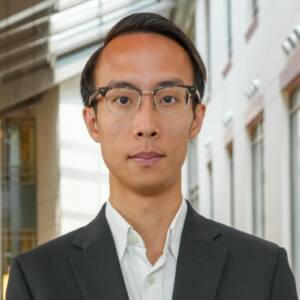
Born and raised in Hong Kong, Ng Tsz Nok Christopher is a Master of Divinity candidate at Candler School of Theology, Emory University. Having had the honor to work with refugees and displaced people for a number of years in Hong Kong, a passion for peacebuilding and conflict transformation has been cultivated, as Chris continues to discern and pursue his call to become a peacemaker. He loves learning from and with people, building authentic relationships and treasuring every encounter he has with anyone. He also enjoys listening to music, cycling and being by the sea.

Footnotes:

[1] Yale Divinity School, “No More Deaths: An Interview with John Fife,” Reflections 95, no. 2 (2008): 48-51.

[2] See Ann Crittenden, Sanctuary: A Story of American Conscience and the Law in Collision (Weidenfeld and Nicolson, 1988). See also Leo Guardado, Church as Sanctuary: Reconstructing Refuge in a Age of Forced Displacement (Orbis Books, 2023).

[3] See Erica Meijers, “‘For Everyone Born, a Place at the Table:’ The Encounter of Eucharist and Diaconia During a Sanctuary in the Netherlands.” Ecclesial Practices 9, no. 2 (2022): 165-185, https://pure.pthu.nl/ws/portalfiles/portal/69699426/ep-article-p165_003.pdf. See also Erica Meijers, “Sanctuary as a Moving Practice: The Dynamics between Diaconia, Liturgy and Politics during the Church Asylum in The Hague, 2018-2019.” Stellenbosch Theological Journal 10, no. 1 (2024): 1-24, http://dx.doi.org/10.17570/stj.2024.v10n1.m5. An account of the events unfolding during the sanctuary can be found in the book published in the Dutch language: Willem van der Meiden and Derk Stegeman, Dat Wonderlijke Kerkasiel De Non-Stop Viering in de Haagse Bethelkapel (Uitgeverij Skandalon, 2020).

[4] Sarah Hurtes, “Despite Attacks, an Underground Church for L.G.B.T.Q. Africans Thrives,” New York Times, December 29, 2024, https://www.nytimes.com/2024/12/29/world/africa/kenya-africa-lgbtq-church.html.

[5] Gordon Lathrop, Holy People: A Liturgical Ecclesiology (Fortress Press, 1999), 13.

[6] Guardado, Church as Sanctuary, 211.

[7] John 1:14.

[8] Guardado, Church as Sanctuary, 193.

[9] Janna L. Hunter-Bowman, Witnessing Peace: Becoming Agents Under Duress in Columbia (Routledge, 2024), 5. See also Erin Brigham, Church as Field Hospital: Toward an Ecclesiology of Sanctuary (Liturgical Press, 2022), 184.

[10] Pieter Dronkers, “When Being a Good Samaritan is Not Good Enough: Church Sanctuary and Privileged Responsibility,” Journal of Refugee Studies 35, no. 3 (2022): 1400-1401, https://doi.org/10.1093/jrs/feac011.


About the top image: Circle of Hope (2018) by Ng Tsz Nok Christopher, May 28, 2018, Balukhali Refugee Camp, Cox’s Bazar, Bangladesh

Children gathered to showcase their creativity and imagination in drawing their futures into being.  This photo is dedicated to folks who are displaced that the Divine’s presence can be experienced through the sanctuaries embracing them on the way. 

We would love to hear from you!

Address

The Center for Public Theology & Migration
Boston, Massachusetts 

Say Hello

info@theologyandmigration.com

Center for Public Theology & Migration  © 2025. All Rights Reserved.