One of the questions that has troubled me for years is why people sometimes seek refuge in the very systems that diminish them.
I found myself wrestling with that question while sitting in Heathrow Airport in London on the day of the 2024 U.S. presidential election. News screens flashed updates from across the Atlantic while travelers hurried between terminals. Some spoke of hope. Others spoke of fear. Yet what struck me most was not the election itself. It was the realization that many of the communities most vulnerable to exclusion—immigrants, refugees, working-class families, and even some Christian leaders committed to global missions—were helping return to power a political movement that often portrayed them as threats.
The question stayed with me long after my flight departed.
Why do people sometimes choose the oppressor?
The easy answer is ignorance. The harder answer is fear.
In Embracing Fear, I argue that fear is one of the dominant spiritual realities of our age. Fear is not merely an emotion; it is a social force. It shapes our imagination, influences our political choices, and teaches us whom to trust and whom to fear. But fear rarely travels alone. Fear seeks refuge. And one of the most powerful refuges it can find is belonging.
When Belonging Becomes a Shelter
Human beings long to belong.
We want communities that tell us who we are, where we fit, and why our lives matter. We seek recognition, meaning, identity, and security. There is nothing wrong with this desire. It is part of practicing humanity.
The problem emerges when fear begins to shape the communities to which we belong.
In anxious societies like ours, belonging can become organized around shared fears rather than shared hopes. Communal bonds unite against perceived enemies, threats, and outsiders. Membership is secured not through mutual care but through conformity. The emotional bargain becomes deceptively simple:
You can belong here—as long as you fear what we fear, and you like who we like.
This helps explain why authoritarian movements remain attractive in many parts of the world. They do more than offer political programs. They offer moral certainty and emotional belonging.
They promise order amid confusion.
Identity amid change.
Security amid uncertainty.
For people navigating economic instability, demographic shifts, cultural conflict, or political polarization, such promises can feel reassuring. Fear creates anxiety. Belonging offers relief.
The tragedy is that this relief often comes at a cost.
Choosing the Oppressor
One of the central arguments of Embracing Fear is that systems of domination rarely survive through coercion alone. They endure because they persuade vulnerable and privileged people alike to participate in them. As I explore in Chapter 2, authoritarian populism has repeatedly succeeded by converting victims into defenders of hierarchy. Historical examples can be found in colonial settings from British India to Tlaxcala, and contemporary examples appear in surprising patterns of support for authoritarian movements among marginalized communities themselves.
This reality is unsettling because it challenges the assumption that people always act according to their own interests.
They do not.
In polarized contexts, people often act according to their fears more than their hopes. Fear feels immediate. Hope feels distant.
Throughout history, colonized peoples have sometimes aligned themselves with imperial powers. Vulnerable communities have occasionally embraced exclusionary movements. Immigrants have supported anti-immigrant policies. The marginalized have sometimes defended systems that continue to marginalize others.
Why?
Because fear can persuade people that proximity to power is survival, hence, safer than solidarity with the vulnerable.
The Spanish philosopher Adela Cortina offers a helpful concept here: aporophobia, the fear of the poor.[1] Authoritarian politics often exploits this fear. People become anxious not merely about cultural change or political conflict but about becoming disposable themselves. They fear losing social standing, economic stability, or public recognition. They fear becoming invisible.
In such moments, aligning with power can feel safer than challenging it.
Fear whispers a dangerous promise:
If you stand close enough to power, perhaps power will spare you.
Remembering Egypt —when Bondage Looks Attractive
Scripture understands this temptation remarkably well.
One of the most surprising moments in the biblical story occurs after the ancient Hebrew people was liberated from Egypt. The sea has parted. Pharaoh’s power has been broken. Freedom has arrived.
Yet before long, the people begin remembering Egypt differently (Exodus 16).
They remember food.
Predictability.
Order.
Again and again, they ask Moses why he brought them into the wilderness.
The irony is painful.
Egypt had enslaved them.
Egypt had exploited them.
Egypt had denied their dignity.
Yet uncertainty made bondage look attractive.
The wilderness exposed a difficult truth: sometimes oppression feels safer than freedom.
Freedom requires trust.
Freedom requires imagination.
Freedom requires learning to live toward a future that cannot yet be seen.
Empire offers something easier.
Empire offers certainty.
The temptation facing biblical Israel remains the temptation facing many societies today.
Pentecost and Another Kind of Belonging
The gospel offers a radically different vision.
At Babel (Gen. 11), belonging is achieved through uniformity and conformity. One language. One project. One identity. Difference becomes a threat to control.
At Pentecost (Acts 2), belonging emerges through difference-in-communion. Many languages. Many peoples. One Spirit.
The miracle is not that difference disappears.
The miracle is that difference no longer prevents community and imagination.
This is why Pentecost remains one of Scripture’s most profound responses to authoritarian belonging, whether embodied in the Roman Empire or in Israel’s Sanhedrin. It refuses the false choice between fragmentation and conformity. It imagines a community held together not by fear but by grace.
For churches working among migrants, refugees, and displaced communities, this vision matters deeply. The challenge is not merely to defend the vulnerable. It is to expose the fears that make exclusion appear reasonable in the first place.
Because the deepest political struggles of our time are often struggles over belonging.
Who belongs?
Who decides?
What future are we building together?
For Christian disciples, the answer cannot be found in Babel’s monoculturalism or Egypt’s nostalgia.
It must be found in Pentecost reexistence.
The question is not whether we belong, but to whom—and for what future.
We are called to become re-existence people: communities that practice tomorrow’s radical hospitality in today’s anxious world.
Follow us on Facebook, Instagram, and Youtube for more content like this.

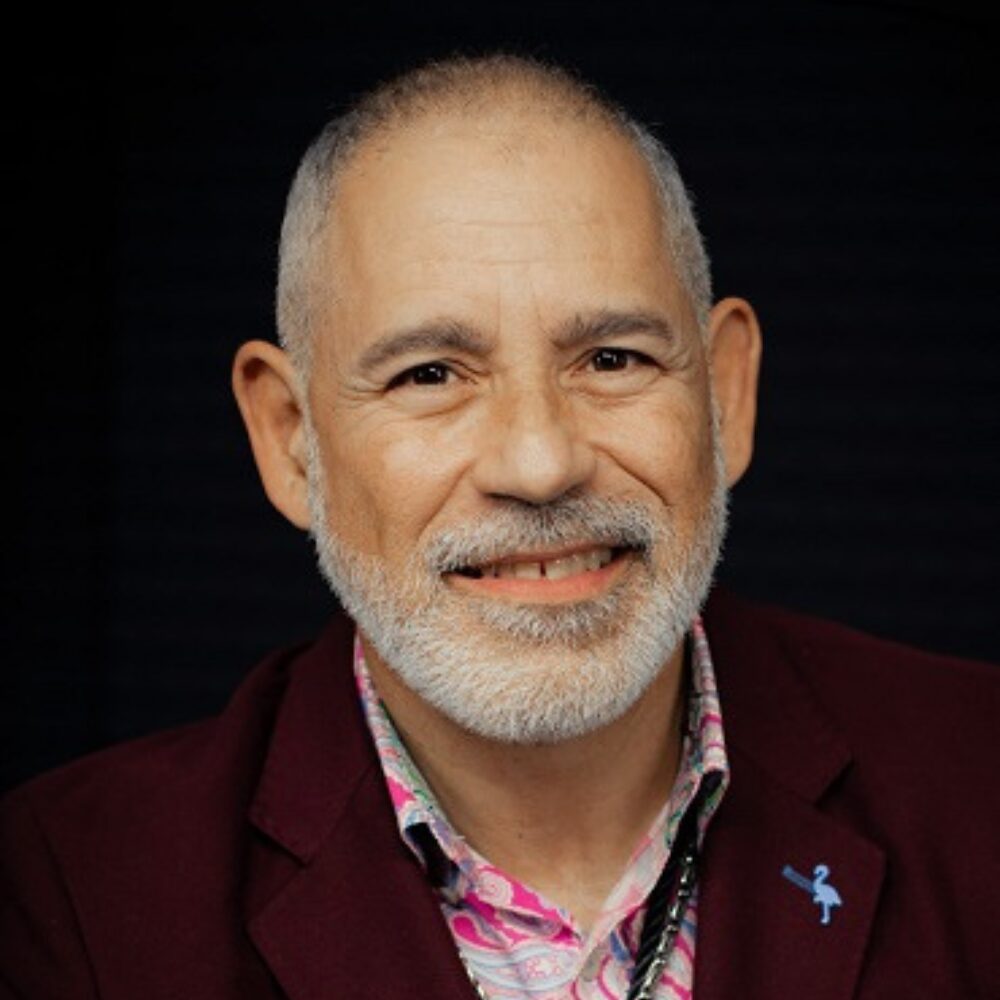 Oscar García-Johnson is Professor of Theology and Decolonial Studies at Fuller Theological Seminary, an ordained minister in the American Baptist Churches USA, and an activist-scholar with La Fuente Ministries. He is the author of Decolonial Love in Times of Hatred, Embracing Fear: Christian Reexistence in the Trump Era, and Introducción a la Teología del Nuevo Mundo.