I am a migrant, and I am also a Christian. From that intersection, I want to make a simple but urgent claim: we are sanctuary. We are the dwelling place of God.
In a time of rising anti-immigrant rhetoric and renewed forms of Christian nationalism, the language of “sanctuary” has returned to public discourse. Often, however, it is reduced to buildings, policies, or symbolic gestures. Scripture invites us to remember something deeper. Sanctuary was never primarily about walls or gold; it was about presence, God choosing to dwell among a wandering, displaced people.
In Exodus, we read how God tells Israel, “Let them make me a sanctuary, so that I may dwell among them”. This command is given not to a settled nation, but to a people in the wilderness. Sanctuary, from the beginning, is mobile. It is a tent that moves with the people, a home that travels with the exiled, a sign that God refuses to remain distant from human vulnerability.
From that moment on, sanctuary becomes a moving reality, a presence that walks with the people, not a monument that fixes God in one place. Later, the prophets insist that God’s true dwelling is not secured by temples made by human hands, but revealed in lives that do justice and love mercy. The biblical witness consistently resists the temptation to locate God in protected spaces while ignoring suffering bodies.
This trajectory reaches its fullest expression in Jesus. In the Word made flesh, the migrant God among us, sanctuary takes on flesh and blood. The holy space becomes a body, then a community, a table open to strangers. Jesus does not invite the displaced into a sacred building; he becomes sacred presence among them, and through them. That is the memory we must recover today: we are sanctuary because God first chose to dwell with the displaced.
As Gustavo Gutiérrez reminds us, “The presence of God is found where the struggle for life and dignity takes place.” If this is true, then sanctuary cannot be confined to religious structures. It must be recognized wherever human dignity is defended, especially among those whose lives are most threatened today: migrant communities.
This conviction has been shaped not only by theology, but by lived experience. As a migrant, I know how life changes when a faith community becomes more than a Sunday gathering, when it becomes a network of support, belonging, and care. I found refuge not in a building, but in people who chose to embody hospitality.
I have also seen this embodied sanctuary through my work alongside churches and faith-based organizations serving migrants and refugees. I have witnessed congregations open their doors to unaccompanied children, families offer their homes to newcomers, and volunteers accompany migrants through legal, emotional, and spiritual uncertainty. In these moments, sanctuary is no longer an abstract concept; it is practiced and relational.
Theologically, this matters. If God’s presence is truly found among the displaced today, then it makes far more sense to protect and care for the sacred lives of migrants than to prioritize the preservation of empty buildings. This is not a rejection of sacred space, but a reorientation of it. People, not structures, are the primary dwelling place of God.
The Christian tradition itself bears witness to this truth. Across centuries, believers have had to decide whether sanctuary would serve power or protect the vulnerable. Again and again, faithful communities have rediscovered that to be church is to stand with those on the margins.
Contemporary theologians echo this call. Joel N. Martínez reminds us that a biblical spirituality must be “combative,” not merely contemplative, which is to be engaged in the public struggle for justice. Sanctuary, then, is not only refuge; it is resistance. It names xenophobia as sin, dehumanization as idolatry, and silence in the face of suffering as unfaithfulness.
To reclaim the Church as sanctuary today is not to invent something new. It is to remember who we have always been called to be: a people shaped by pain and hope, a community formed by God’s presence among the displaced, a body willing to become holy ground wherever human life is threatened.
If God is present in the lives of our migrant brothers and sisters today, faithful witness requires that we constantly ask ourselves if we are treating them with the dignity and sacredness they deserve? Are we able to recognize God’s presence among those our society seeks to exclude?
To answer these questions honestly is to begin reclaiming the People of God as sanctuary.

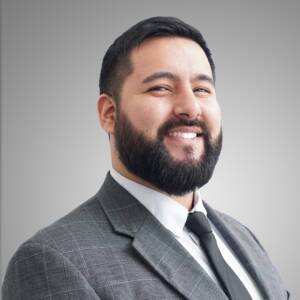 Daniel Soto González is a Chilean-born migrant, Pentecostal theologian, and community advocate. He holds an M.A. in Ministry from McCormick Theological Seminary and has spent several years working with migrant and refugee communities in the U.S. Daniel has served alongside faith-based organizations supporting unaccompanied children, migrant families, and refugee resettlement initiatives. His work explores migration, sanctuary, and public theology at the intersection of faith, justice, and lived experience.